Repairing Heaving Poolside Pavers Before Deep Frost Hits Ontario
JD Interlocking Inc • September 8, 2026
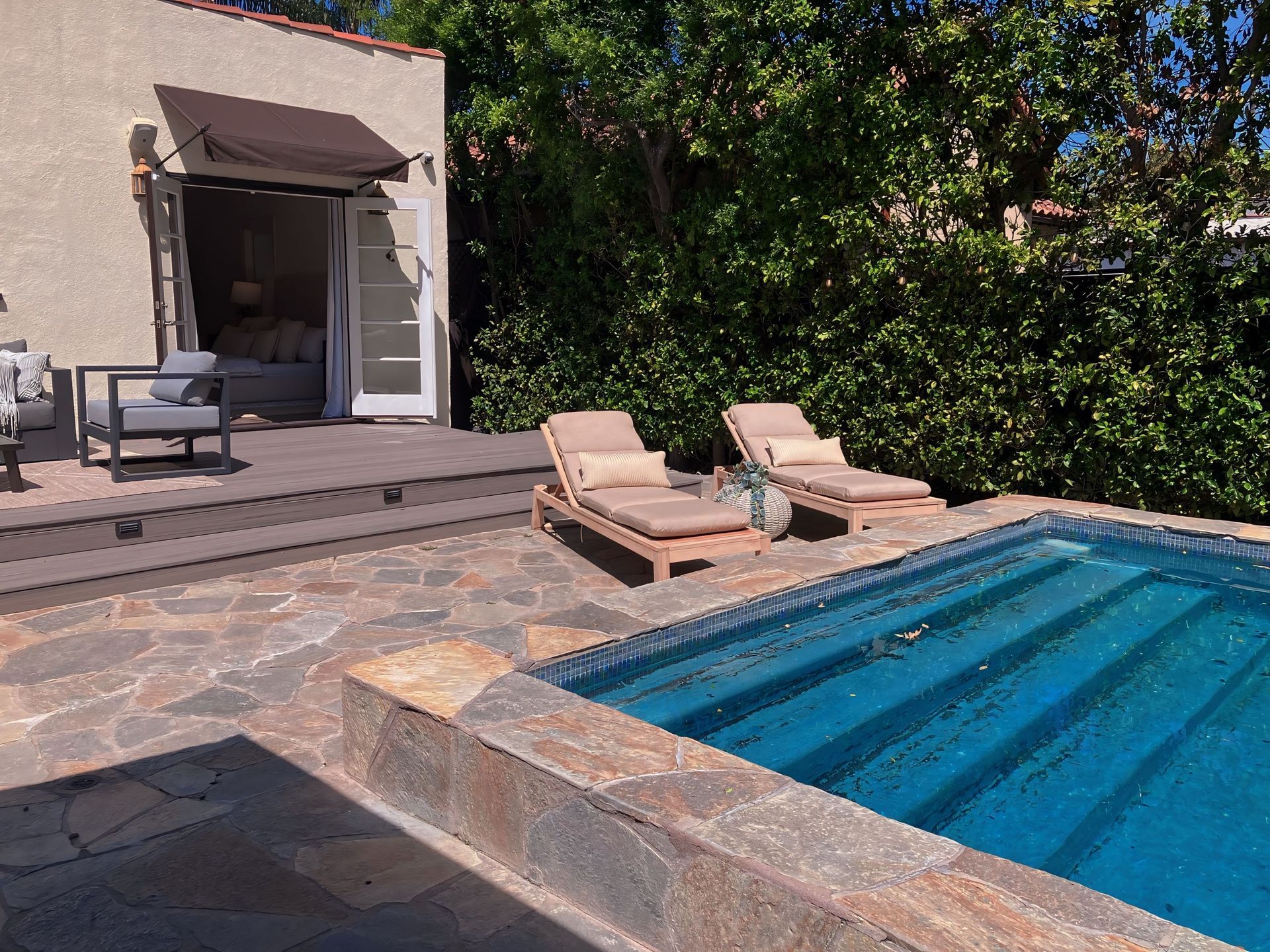
The transition from late summer to fall signals pool closing time for many homeowners in neighborhoods like Sunningdale. JD Interlocking Inc. always recommends checking your hardscaping carefully during this seasonal shift. When water gets trapped under loose stones, the approaching freezing temperatures will turn a minor dip into a major structural problem.
Repairing heaving poolside pavers right now stops ice expansion from pushing the stones completely out of place over the winter. Securing the base before the deep frost sets in protects your investment and ensures the area is safe for next year. We break down the exact stages to secure your outdoor spaces while the weather still allows for proper ground compaction.
In This Article:
- Stage 1: Assess Your Poolside Installation for Water Traps
- Stage 2: Schedule Structural Base Corrections
- Stage 3: Protect and Seal Before the Deep Freeze
- Frequently Asked Questions
Stage 1: Assess Your Poolside Installation for Water Traps
Before you cover the pool for the winter, you need to identify exactly where water is sitting on your patio. The goal is to spot failing areas before the autumn rains fully saturate the ground.
- Visual Inspection: Walk the perimeter of your pool after a rainstorm to spot any puddles or sunken sections.
- Drainage Check: Look for areas where the joint sand has completely washed away between the stones.
- Coping Integrity: Check the stones directly bordering the water for any rocking or loose movement when you step on them.
► Leaving compromised joints open allows autumn rain to saturate the sub-base right before the ground freezes solid.
Stage 2: Schedule Structural Base Corrections
Once you spot the problem areas, correcting the foundation is the next critical step. This involves lifting the affected stones and fixing the granular base beneath them so water drains away properly.
- Gravel Compaction: The underlying crushed stone must be re-leveled and mechanically compacted to support the surface weight.
- Sand Replacement: Saturated bedding sand needs swapping out for a fresh layer to restore a perfectly flat setting bed.
- Edge Restraint Repair: Plastic or concrete borders holding the stones in place must be re-secured so the pavers do not slide outward.
→ From a professional standpoint: Compacting a wet, failing base in November is nearly impossible once the ground temperatures drop below freezing.
Fixing these underlying issues quickly and reliably is something clients notice firsthand.
► Client Experience: I had my patio installed by JD Interlocking last summer, and after the stones shifted over the winter, they came back this summer and fixed everything under their warranty without any hassle. Really appreciate their professionalism and commitment to standing behind their work. Definitely recommend them if you want a team that cares about getting the job right.
Standing behind our work means making sure your pool area is structurally sound before winter weather can test it again.
Stage 3: Protect and Seal Before the Deep Freeze
The final stage is locking the repaired stones in place and sealing the surface against the coming snow. Proper joint filling acts as your first line of defense against ice damage.
- Joint Filling: Sweeping new polymeric sand into the gaps blocks moisture from reaching the freshly compacted base.
- Water Activation: Carefully wetting the sand triggers the hardening process so it cures like concrete before the first frost.
- Debris Clearance: Sweeping away wet autumn leaves prevents organic matter from staining the stones or rotting inside the joints.
Frequently Asked Questions
What causes pavers around a pool to sink?
Poolside stones sink primarily because water splashes out and erodes the bedding sand beneath them. If the original granular base lacks proper compaction, the continuous moisture will cause the gravel to settle unevenly. Chlorine and salt water can also break down cheap jointing sand over the summer, allowing water to penetrate straight into the foundation.
Can frost heave destroy a pool coping?
Yes. When water freezes behind or underneath the coping stones, it expands with massive force. This outward pressure can snap the concrete bond beam or push the coping blocks right into the pool. Securing the interlocking stones directly behind the coping prevents this moisture from migrating forward and causing catastrophic winter damage.
Should I repair pool hardscaping in fall or spring?
Fall is always the superior time to correct structural issues around a pool. Fixing the base before winter prevents the freeze and thaw cycle from making the existing damage significantly worse. By spring, a minor dip can turn into a massive trench that requires complete excavation and much higher costs.
Secure Your Hardscaping Today
Do not wait until the snow flies to address your poolside installation. Our fall schedule fills up quickly as homeowners rush to close their pools and secure their yards. Reach out to our team today to get those repairs locked in while ground conditions are still perfect for base compaction.
Share This Blog